
What is ChatGPT?
ChatGPT is an Artificial Intelligence (AI) chatbot developed by OpenAI. It is designed to understand human language and respond in a conversational way. ChatGPT can answer questions, write essays, solve mathematical problems, generate computer programs, translate languages, and assist users in many other tasks.
The name “ChatGPT” comes from:
- Chat – because it communicates like a human conversation.
- GPT – which stands for Generative Pre-trained Transformer, a type of AI language model.
Since its launch, ChatGPT has become one of the most popular AI tools in the world and is widely used by students, teachers, businesses, programmers, writers, and researchers.
History of ChatGPT
OpenAI was founded in 2015 with the aim of developing safe and useful Artificial Intelligence. The organization created several AI language models before launching ChatGPT.
Important developments include:
- GPT-1 – First language model introduced by OpenAI.
- GPT-2 – More advanced text generation model.
- GPT-3 – Highly powerful AI capable of generating human-like responses.
- ChatGPT – Released in 2022 for public interaction.
- GPT-4 and newer models – Improved understanding, reasoning, and accuracy.
ChatGPT quickly gained millions of users because of its ability to communicate naturally and provide instant assistance.
Features of ChatGPT
- Natural Language Understanding
ChatGPT can understand and respond to human language in a simple and natural manner.
- Answering Questions
It can answer questions related to:
- Science
- Mathematics
- History
- Programming
- Geography
- Literature
- General knowledge
- Content Writing
ChatGPT helps users write:
- Essays
- Articles
- Emails
- Stories
- Poems
- Reports
- Resumes
- Programming Assistance
It can generate and explain programming code in languages such as:
- C
- C++
- Java
- Python
- VB.NET
- JavaScript
- Translation
ChatGPT can translate text between different languages including English, Hindi, Punjabi, French, and many others.
- Learning Support
Students use ChatGPT for:
- Homework help
- Exam preparation
- Notes making
- Concept explanation
- Creative Work
It can create:
- Dialogues
- Song lyrics
- Scripts
- Ideas for projects
Working of ChatGPT
ChatGPT works using Artificial Intelligence and Machine Learning techniques.
Main Technologies Used
- Artificial Intelligence (AI)
AI enables computers to perform tasks that normally require human intelligence.
- Machine Learning (ML)
Machine learning allows the system to learn from large amounts of data.
- Neural Networks
ChatGPT uses neural networks that imitate the working of the human brain.
- Transformer Model
The transformer architecture helps ChatGPT understand context and relationships between words.
Advantages of ChatGPT
- Fast Responses
It provides instant answers to user questions.
- 24/7 Availability
ChatGPT is available anytime and anywhere with internet access.
- Educational Support
It helps students understand difficult topics easily.
- Increased Productivity
Professionals use it to save time in writing and research tasks.
- Easy Communication
Users can interact with ChatGPT in simple language.
Disadvantages of ChatGPT
- Incorrect Information
Sometimes ChatGPT may provide wrong or outdated information.
- Lack of Human Emotion
It cannot fully understand emotions like humans.
- Internet Dependency
Users generally need internet access to use ChatGPT.
- Privacy Concerns
Users should avoid sharing sensitive personal information.
- Overdependence
Excessive dependence on AI may reduce independent thinking skills.
Applications of ChatGPT
In Education
- Online learning
- Homework assistance
- Language learning
In Business
- Customer support
- Email drafting
- Report generation
In Programming
- Code generation
- Debugging
- Software development help
In Healthcare
- Basic information support
- Medical documentation assistance
In Content Creation
- Blog writing
- Social media captions
- Marketing content
Impact of ChatGPT on Society
ChatGPT has changed the way people access information and perform daily tasks. It has improved communication, learning, and productivity. Many industries are adopting AI tools to automate routine work.
At the same time, experts discuss challenges such as:
- Job displacement
- Ethical use of AI
- Data privacy
- Misinformation
Therefore, responsible use of AI is important.
Future of ChatGPT
The future of ChatGPT and AI technology is very promising. Future improvements may include:
- Better accuracy
- More human-like conversations
- Advanced reasoning abilities
- Improved voice and image understanding
- Greater support in education and healthcare
AI systems are expected to become more useful and integrated into daily life.
Conclusion
ChatGPT is a revolutionary AI chatbot developed by OpenAI. It helps users in learning, writing, programming, communication, and many other tasks. Although it has some limitations, its advantages and applications make it one of the most important technological innovations of modern times. With continuous improvements in Artificial Intelligence, ChatGPT is expected to play a major role in the future of education, business, and technology.
How to Use ChatGPT?
Steps to Use ChatGPT
- Open ChatGPT
Go to the ChatGPT official website
You can use ChatGPT on:
- Computer
- Laptop
- Mobile phone
- Tablet
- Sign Up or Log In
- Create an account using:
- Email address
- Google account
- Microsoft account
- Apple account
OR
- Log in if you already have an account.
- Type Your Question
After opening ChatGPT, you will see a message box.
Type your question or instruction, such as:
- “What is computer?”
- “Write a letter to principal.”
- “Create a C program.”
- “Explain DBMS.”
- “Translate English to Hindi.”
Then press Enter or click the send button.
- Read the Response
ChatGPT will quickly generate an answer.
You can:
- Read it
- Copy it
- Edit it
- Ask more questions
Ways to Use ChatGPT
- For Education
Students can use ChatGPT for:
- Homework help
- Notes preparation
- Exam revision
- Essay writing
- Programming practice
Example:
“Explain linear data structure in detail.”
- For Programming
ChatGPT can help in:
- Writing code
- Finding errors
- Explaining programs
- Learning programming languages
Supported languages include:
- C
- C++
- Java
- Python
- VB.NET
- SQL
Example:
“Write a bubble sort program in C.”
- For Writing
You can create:
- Articles
- Emails
- Applications
- Resumes
- Stories
- Poems
Example:
“Write an article on Computer.”
- For Translation
ChatGPT can translate languages.
Example:
“Translate ‘Good Morning’ into Hindi.”
- For Daily Tasks
It can help with:
- Time management
- Travel planning
- Recipes
- General knowledge
- Career guidance
Tips for Better Results
- Ask Clear Questions
Good questions give better answers.
Example
Instead of:
“Programming”
Write:
“Explain object-oriented programming in Java with examples.”
- Give Complete Instructions
Example:
“Write a formal leave application for school in English.”
- Ask Follow-up Questions
You can continue the conversation.
Example:
“Explain again in simple language.”
- Verify Important Information
For exams, medical, or legal information, always verify from trusted sources because AI can sometimes make mistakes.
Advantages of Using ChatGPT
- Fast answers
- Easy to use
- Available 24/7
- Helpful for learning
- Supports multiple languages
- Saves time
Limitations of ChatGPT
- Sometimes gives incorrect answers
- May not always understand emotions
- Requires internet connection
- Information can occasionally be outdated
Safety Tips
- Do not share passwords or personal details.
- Use AI responsibly.
- Avoid copying assignments directly without understanding.
What is ChatGPT best used for?
Best Uses of ChatGPT
ChatGPT is best used for tasks that involve language, learning, problem-solving, and creativity. It can help students, teachers, programmers, writers, businesses, and everyday users.
- Education and Learning
ChatGPT is very useful for students and teachers.
It can help with:
- Explaining difficult topics
- Homework assistance
- Notes preparation
- Exam revision
- Language learning
Example
“Explain data structure in simple language.”
- Programming and Coding
ChatGPT is widely used for programming help.
It can:
- Write code
- Debug errors
- Explain programs
- Generate SQL queries
- Help learn coding languages
Supported languages include:
- C
- C++
- Java
- Python
- VB.NET
- JavaScript
- SQL
Example
“Write a Java program for bubble sort.”
- Content Writing
It helps create different types of written content.
Examples:
- Articles
- Essays
- Emails
- Applications
- Resumes
- Reports
- Stories and poems
Example
“Write an article on Artificial Intelligence.”
- Translation and Language Help
ChatGPT can translate and improve language.
It helps with:
- English to Hindi translation
- Grammar correction
- Sentence improvement
- Vocabulary learning
Example
“Translate ‘How are you?’ into Punjabi.”
- Business and Office Work
Professionals use ChatGPT for:
- Email drafting
- Report writing
- Presentation ideas
- Customer support replies
- Data organization ideas
- Creative Work
It can generate:
- Story ideas
- Scripts
- Dialogues
- Song lyrics
- Social media captions
- Daily Life Assistance
ChatGPT can also help in everyday activities.
Examples:
- Travel planning
- Recipe suggestions
- Time management
- Career guidance
- General knowledge
- Research and Information
It helps users quickly understand topics by summarizing information and explaining concepts clearly.
Example
“Explain cloud computing in detail.”
Advantages of Using ChatGPT
- Fast responses
- Easy communication
- Available anytime
- Supports multiple languages
- Saves time and effort
Important Note
Although ChatGPT is very useful, users should verify important information because AI can sometimes provide incorrect or outdated answers.
Conclusion
ChatGPT is best used for education, coding, writing, translation, creativity, business tasks, and daily assistance. It is a powerful AI tool that improves productivity, learning, and communication for people around the world.
ChatGPT Image Generation
ChatGPT can create and edit images using AI. Users can generate pictures by typing simple text instructions called prompts.
Examples of Images ChatGPT Can Create
- Nature scenes
- Cartoon characters
- Logos
- Posters
- AI art
- Photorealistic pictures
- Thumbnails
- Stickers
- Social media images
How to Create Images in ChatGPT
- Open:
ChatGPT Official website
- Type an image prompt such as:
- “Create a sunset beach image.”
- “Generate a cute cat cartoon.”
- “Make a logo for my website.”
- Click send.
- ChatGPT will generate the image automatically.
Image Editing Feature
You can also upload an existing image and ask ChatGPT to edit it.
Example
- “Change the background to blue.”
- “Convert this photo into anime style.”
- “Add sunglasses to the person.”
ChatGPT supports image editing with selection tools and detailed instructions.
Features of ChatGPT Images
- High Quality Images
ChatGPT can generate realistic and artistic images.
- Text in Images
It can create posters and banners with readable text.
- Multiple Styles
Supported styles include:
- Anime
- 3D art
- Oil painting
- Pencil sketch
- Cartoon
- Realistic photography
- Fast Generation
Images are generated quickly depending on complexity.
Popular Uses
- YouTube thumbnails
- Website graphics
- Educational diagrams
- Social media posts
- Digital art
- Business advertisements
Example Prompts
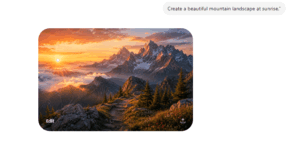
Nature
“Create a beautiful mountain landscape at sunrise.”
Cartoon
“Generate a cute panda cartoon in Pixar style.”
Poster
“Create a motivational poster with dark background.”
Logo
“Design a modern logo for a computer institute.”
Recent Improvements
Newer image models in ChatGPT provide:
- Better realism
- Improved text rendering
- More accurate editing
- Faster generation
- Better instruction understanding